
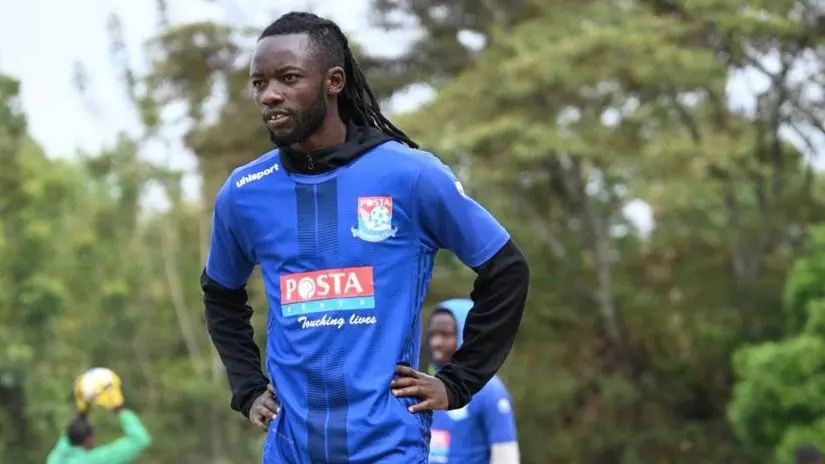
The FKF Premier League clash between Posta Rangers and Mara Sugar at Kasarani Annex was supposed to be a routine mid-season stop on a long campaign, yet it ended up as one of those matches that linger in conversations, not because of the scoreline, but because of refereeing controversy, tactical gambles, and the fragile psychology of a team fighting to rediscover its early season spark.
Referee at the center of the storm
When the final whistle blew on the 1-1 draw, the focus was not on the goals or the patterns of play. Instead, it was on centre referee Dan Ogosi, whom Posta Rangers head coach Sammy “Pamzo” Omollo openly blamed for what he viewed as a deeply flawed performance. The experienced tactician did not mince his words, branding the officiating “unfair and inconsistent” and pointing a firm finger at the penalty awarded to Mara Sugar.
According to Omollo, the spot kick, which Mara Sugar forward Drona Langa converted to cancel out Brian Otieno’s first half opener, was a “soft” decision that should not have stood. In his view, the contact simply did not merit such a game-changing call, particularly at a moment when Posta Rangers felt they were in control. For a coach who rarely goes public with refereeing complaints, this outburst underlined how strongly he believed his team had been wronged.
The penalty that changed the game
The turning point of the match came when Mara Sugar were handed that penalty. Langa, reliable from twelve yards, stepped up and buried the chance, dragging the Sugar Millers level after Otieno had given the Mailmen a deserved lead. In a contest where clear cut opportunities were hard to come by, that decision loomed large in the narrative and left Posta’s bench seething.
Omollo’s frustration did not stem only from the one decision in Mara Sugar’s favour. He also highlighted what he felt was a glaring inconsistency in Ogosi’s interpretation of similar incidents in the penalty area, and it was that perceived double standard that made this draw especially hard to accept for Posta Rangers.
The denied penalty that fuelled the anger
If the “soft” penalty awarded to Mara Sugar was the spark, then the incident involving Posta Rangers winger Caleb Olilo was the fuel that kept the fire burning. Omollo was adamant that Olilo had been clearly fouled inside the six yard box, a moment that could have given Posta a second goal and possibly sealed the contest. Instead, the referee waved play on, and the moment vanished into a cloud of resentment.
For Omollo, this was not only about one missed call, but about what he saw as a pattern during the match. “At the same time, Olilo was clearly fouled in the box, yet the referee did nothing,” he argued, linking the non call directly to the debatable penalty at the other end. To him, this mismatch in decisions represented the kind of inconsistency that undermines trust in officiating standards in the Kenyan Premier League.
Between rage and realism for Sammy Omollo
There was emotion in Omollo’s words, but there was also perspective. Even as he vented about Ogosi’s performance, he took time to reflect on his own team’s journey. Posta Rangers are not the same side that struggled last season. Back then, after nine rounds, they were rooted near the bottom of the table, fighting anxiety as much as opponents. Now they sit in the top five, a position that would have felt like fantasy a year earlier.
“The team is progressing well,” Omollo noted, finding a silver lining in a match that had left him fuming. That balance, between anger at how the game unfolded and recognition of broader progress, revealed a coach trying to manage both the immediate sting of lost points and the longer term growth of a squad that has quietly raised its ambitions.
Soft goals and a stubborn defensive problem
Still, Omollo did not hide his concerns about another recurring theme in their campaign, the tendency to concede what he called “soft goals”. Even if he felt aggrieved by the penalty, he also acknowledged that his backline has not always been as ruthless or as compact as a top five team needs to be. The goal they conceded against Mara Sugar, regardless of its origin, tapped into that deeper worry.
The coach spoke of the work going on behind the scenes, the efforts by his technical bench to tighten the defensive unit and cut out errors. For a side that wants to turn promising performances into consistent results, limiting those avoidable concessions is crucial. The Mara Sugar equaliser, even wrapped in controversy, became another reminder that small lapses carry big consequences.
From early high to current winless run
Posta Rangers began the season like a team on a mission. Three wins from their first four matches, plus a spell at the summit of the FKF Premier League table, gave the impression of a side ready to change its story. The Mailmen looked organised, hungry and above all confident, a stark contrast to the hesitant group that had flirted with relegation not long ago.
Yet football seasons are rarely linear. That bright opening has been followed by a harsh correction, as Posta have slipped into a five match winless streak. The draw with Mara Sugar, while not disastrous on its own, extended a run that weighs on minds in the dressing room and on the training ground. The blend of officiating frustrations and defensive questions now sits atop a more basic concern, the need to turn performances into victories again.
Collins Omondi and the puzzle of Oliver Maloba
If Omollo’s criticism of the referee dominated the headlines, another talking point from the Mara Sugar match emerged from the technical area. Assistant coach Collins “Korea” Omondi found himself explaining one of the most unusual coaching decisions a fan will see, substituting winger Oliver Maloba twice in the same game.
The circumstances, as Omondi later described them, were rooted in performance and game state. Maloba had entered the match in the 67th minute, a fresh attacking option as Posta chased a breakthrough. Yet, a few minutes before the 90th minute mark, he was withdrawn again, a move that raised eyebrows among those in the stands and on social media.
Why Maloba came off after coming on
Omondi was clear in his reasoning. From his vantage point, Maloba was simply not delivering what the situation demanded. “If you were keen, you would realise he had a lot of missed passes,” the assistant coach explained. For a team looking for control and cutting edge in the final third, each turnover was a small gift to Mara Sugar, an invitation to counter and relieve pressure.
“We were chasing a win, and he was losing too many balls,” Omondi said. The coaching staff concluded that, rather than persist and hope Maloba found his rhythm, the smarter move was to bring him off in order to stabilise possession. It was a harsh call on the winger, but it carried a clear message about standards and the demands of top flight football.
| CASINO | BONUS | INFO | RATING | |
|---|---|---|---|---|
|
bonus
Sign up for KES 46 bonus after first deposit!
See 11 Bonuses
|
info
20+ crash & instant games, Aviator bonuses BK 0000704 |

|
||
|
bonus
90 free spins weekly!
See 4 Bonuses
|
info
OGL/2024/137/0132 secure platform with top casino games & bonuses. |
|
||
|
bonus
New players get 50 free spins and a Ksh 2500 freebet!
See 7 Bonuses
|
info
BK 0000665 PG 0000405 Good combination of online casino and betting platform |
|
||
|
bonus
100% match bonus up to $500 for new users!
See 6 Bonuses
|
info
Lots of bonuses, 3,000+ games, instant-play & fast payouts No.1668 / JAZ |
|




The human side of a brutal decision
Being substituted is hard enough on any player’s pride. Being substituted after having already come off the bench is something else entirely, a public signal that the coaching staff has lost faith in what you are offering on the day. For Maloba, that walk back to the bench would have felt very long, framed by the knowledge that every eye was on him.
From a journalist’s lens, this becomes one of those defining little episodes that can shape a player’s response. Some shrink from such moments, others turn them into fuel. The Posta Rangers technical team will know that how they speak to Maloba now, in training and in the dressing room, could determine whether this incident becomes a scar or a stepping stone for the winger.
Bixente Otieno and the long road back
Beyond controversies and unusual substitutions, the match against Mara Sugar also carried a quieter, more uplifting subplot. Goalkeeper Bixente Otieno, formerly of Wazito FC, made his first start of the season after spending nine months on the sidelines. His story is a reminder that, beneath every tactical board, there are human battles with fear, recovery and resilience.
Omondi revealed that Otieno had suffered two concussions last season, serious injuries that demanded caution and patience. As he recovered, another goalkeeper, former Gor Mahia shot stopper Fredrick Odhiambo, seized his chance and became the starter. For Otieno, that meant waiting, training in the shadows, and accepting that he would only return when circumstances allowed and form justified a change.
Changing guards between the posts
“He was our best goalkeeper last season,” Omondi said, praising Otieno’s previous contributions. However, with Odhiambo performing well, the coaching staff felt no need to disturb a functioning setup. They would only make a switch if results deteriorated, and as Posta’s winless run stretched, that moment arrived. The match against Mara Sugar became the stage for Otieno’s comeback.
For a club that prides itself on competition for places, the decision underlined how quickly roles can change. Otieno’s return brings depth and renewed pressure to the goalkeeping department, while Odhiambo, who had established himself during his colleague’s enforced absence, now finds himself in a battle to regain his position. This kind of internal rivalry can sharpen standards, but it also demands careful man management from the technical bench.
Searching for positives in a difficult spell
Despite the frustration with refereeing and the disappointment of another match without a win, Omondi still chose to highlight signs of progress. Speaking after the barren draw with Mara Sugar, he pointed to one key improvement. “The positive is that we got a goal, unlike against Sofapaka when we neither scored nor had a shot on target,” he noted, drawing a contrast that might seem modest, but matters when confidence is fragile.
This is the tightrope that Posta Rangers must now walk, acknowledging the very real issues that are holding them back, while protecting the fragile belief that they can still turn their season around. Each small step forward, whether in chance creation, defensive structure or mental resilience, takes on amplified importance during such a stretch.
The psychological toll of a winless run
Five matches without a win can weigh heavily on any group. For a squad that started the season flying and briefly looked like a title contender, the contrast is stark. Players begin to question themselves, coaches face scrutiny over selections and systems, and every refereeing decision is felt more keenly, magnified by the knowledge that margins are thin.
In this context, Omollo’s public criticism of referee Dan Ogosi can be read not only as a defence of his players, but also as a reflection of that mounting pressure. When results stall, the sense that external forces are conspiring against you can grow. The challenge for Posta Rangers now is to turn that sense of injustice into energy, rather than an excuse that drags them further down.
What the Mara Sugar draw reveals about Posta Rangers
Strip away the controversies and the unusual coaching calls, and the draw with Mara Sugar still tells us a lot about where Posta Rangers stand. They remain capable of taking the lead in difficult matches, they still possess players like Brian Otieno who can make decisive contributions, and their structure is strong enough to avoid collapse even when setbacks arise.
At the same time, this game exposed familiar flaws. The tendency to concede at key moments, the difficulty in maintaining control in the final third, and the occasional struggles of substitutes, all feed into a larger portrait of a team still searching for a fully coherent identity. They are neither the desperate outfit of last season nor a finished top four machine. They exist somewhere in between, full of promise, yet short of the ruthless edge that defines elite sides.
Looking ahead to Kakamega Homeboyz
The fixture list offers no time for prolonged introspection. Posta Rangers now turn their attention to a crucial encounter with Kakamega Homeboyz at Bukhungu Stadium on Sunday, 23 November. That match will serve as both a test and an opportunity, a chance to halt the winless streak and to prove that the anger from the Mara Sugar clash can be channelled productively.
For Omollo and Omondi, selection choices will again be under the microscope. Will Otieno keep his place in goal after his return, or will Odhiambo be recalled. How will Maloba be handled, both tactically and emotionally, after his difficult outing. These are the kinds of decisions that shape not just tactics, but the delicate ecosystem of trust in a dressing room.
A season defined by small margins
In many ways, the story of Posta Rangers this season is being written in the thin spaces between success and frustration. A disputed penalty here, a denied spot kick there, a substitution that does not work out, or a defensive lapse at the wrong time, all combine to tilt results and reshape narratives.
The draw with Mara Sugar at Kasarani Annex may not go down as a classic in terms of pure footballing spectacle, but it revealed plenty about character, leadership and the realities of competing in the FKF Premier League. For neutrals, it was a reminder that beyond the scoreline, every match is a web of human stories, from a coach railing against refereeing to a goalkeeper stepping back into the light after months in the shadows.
Final thoughts on a contentious afternoon
As the dust settles, the debate over referee Dan Ogosi’s performance will likely persist in fan forums and training ground conversations. Some will side with Omollo, convinced that Posta Rangers were robbed of victory by a “soft” penalty and a missed call on Caleb Olilo. Others will point out that teams must learn to control what they can, that reliance on officiating decisions is a dangerous crutch.
What is clear is that this match has become a reference point for Posta Rangers, a ninety minute snapshot of both their growth and their growing pains. If they are able to tighten their defence, refine their decision making in attack and use the perceived injustices as motivation rather than distraction, the Mara Sugar draw might one day be remembered less as a missed opportunity and more as a turning point. For now, it stands as a vivid chapter in a season that is still very much being written.