
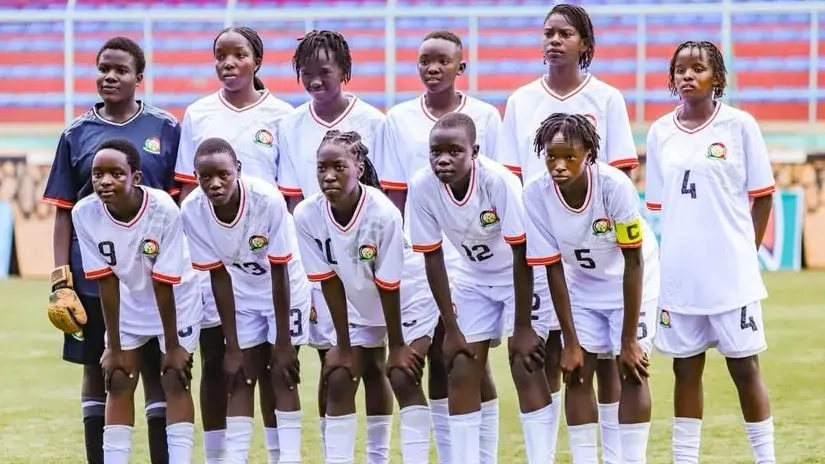
The curtain has fallen on Kenya’s campaign at the African Schools Football Championship CECAFA regional qualifiers in Uganda, and it did so with a mix of frustration, lessons, and a very public blame game between the Kenya Academy of Sports and Football Kenya Federation.
Both the U15 boys and girls teams have been knocked out at the group stage, their dreams of progressing cut short by a combination of tough opposition and, more painfully, chaotic preparation that left them chasing the tournament from the first whistle.
Chaotic build up shadows Kenya’s young hopefuls
From the outset, the Kenyan sides were swimming against the tide. Training together as a squad was minimal, selections were rushed, and crucial time that should have gone into tactical work and team bonding instead disappeared in administrative fog. For players at this age, that lack of structure can be the difference between competing and simply surviving.
Matters were made worse by the travel arrangements. The teams arrived in Uganda on the very morning of their opening fixtures, following hours of bus travel that left legs heavy and minds dulled. In elite youth football, where details decide games, this kind of preparation is the sporting equivalent of starting a race several meters behind the line.
Blame game between KAS and FKF after early exit
As soon as the final group matches were played and elimination confirmed, fingers were pointed in every direction. A swift blame game erupted between the Kenya Academy of Sports (KAS) and the Football Kenya Federation (FKF), each side implicitly or openly questioning the other’s role in the poor preparations.
Amid the noise, one reality stands out with brutal clarity. Inadequate planning, limited joint training sessions, and late travel directly undermined any realistic chance Kenya had of challenging the likes of Uganda, Burundi, Tanzania, or Ethiopia, whose structures and logistics appeared far better aligned.
Harsh lessons for the boys U15 team
The boys U15 side endured the most punishing introduction to the African Schools Football Championship. Thrown into Group A with hosts Uganda, Burundi, and Djibouti, they needed a fast start to settle nerves and build confidence. Instead, their campaign began with a heavy defeat that set the tone.
Against Uganda U15, the Kenyans suffered a 7–0 loss, a scoreline that reflected not only the strength of the hosts but also the impact of tired legs and limited preparation. For young players, such a result can be mentally crushing, especially when it arrives in the first game of a major regional competition.
To their credit, the boys showed improvement in their second outing. Facing Burundi U15, they managed to tighten up and compete more effectively, eventually falling to a narrow 2–1 defeat. The shift from a seven goal loss to a one goal margin hinted at growing cohesion and resilience, even if it came too late to salvage qualification hopes.
Their final group match offered a glimpse of what might have been with proper planning. Kenya U15 outclassed Djibouti U15 in a 3–0 victory, finally putting their attacking qualities on display. The win lifted them to third place in Group A with three points, a modest consolation but an important boost to the players’ confidence.
Boys group A results for Kenya
- Kenya U15 0–7 Uganda U15,
- Kenya U15 1–2 Burundi U15,
- Kenya U15 3–0 Djibouti U15.
Uganda topped Group A ahead of Burundi, while in Group B it was Ethiopia first and Tanzania second, the four nations that eventually filled the semi final spots in the boys category.
| CASINO | BONUS | INFO | RATING | |
|---|---|---|---|---|
|
bonus
500% bonus on first 4 deposits!
See 5 Bonuses
|
info
10 crash games, mobile-first site, 500% welcome bonus BK 000678 |

|
||
|
bonus
New players get 50 free spins and a Ksh 2500 freebet!
See 7 Bonuses
|
info
BK 0000665 PG 0000405 Good combination of online casino and betting platform |
|
||
|
bonus
100% match bonus up to $500 for new users!
See 6 Bonuses
|
info
Lots of bonuses, 3,000+ games, instant-play & fast payouts No.1668 / JAZ |
|
||
|
bonus
Earn 10% cashback on your Aviator net losses!
See 6 Bonuses
|
info
Large welcome bonus, crypto-friendly, huge provider list. OGL/2024/1394/0725 |
|




Girls U15 show resilience in a tough group
The Kenyan girls U15 team faced their own demanding journey, yet their performances carried a slightly steadier rhythm. Also placed in Group A, alongside Rwanda, Burundi, and hosts Uganda, they opened their campaign with a disciplined display.
The first match brought a 0–0 draw with Rwanda U15, a result that showcased defensive focus and organisation. For a team with minimal time together, shutting out opponents at this level was encouraging, hinting at an underlying structure that might have borne more fruit with better build up.
That early optimism met a harsh test against Burundi U15. The East African side proved too strong, handing Kenya a 2–0 defeat. In tournaments of this nature, group standings can swing quickly, and that loss left the girls chasing the pack rather than controlling their own destiny.
In their last group match, however, the Kenyan girls dug deep against hosts Uganda U15. Cheered on by home fans, Uganda were expected to dominate, yet Kenya battled to a 1–1 draw that felt like a moral victory, especially given the off field hurdles they had faced from day one.
Girls group A results for Kenya
- Kenya U15 0–0 Rwanda U15,
- Kenya U15 0–2 Burundi U15,
- Kenya U15 1–1 Uganda U15.
The girls also finished third in Group A with two points. Uganda topped the group with Burundi second, while Group B was led by Tanzania with Ethiopia in second place, the four nations that proceeded to the semi finals in the girls category.
What the results say about Kenyan youth football
On paper, finishing third in both boys and girls groups at a regional qualifier may look like a middling outcome. However, context is everything. When a team arrives on match day morning after hours on the road, when squad training is rushed and selections are late, it is unrealistic to demand sparkling performances or deep tournament runs.
The Kenyan youngsters were effectively playing catch up from the moment they stepped off the bus in Uganda. The heavy defeat to Uganda in the boys competition, the inability of the girls to turn strong spells into wins, these were not just about talent gaps. They were symptoms of systemic issues that fall squarely in the domain of planning and coordination by the responsible bodies.
Accountability and the shared responsibility of KAS and FKF
The public exchange of blame between KAS and FKF raises a bigger question about governance in Kenyan youth football. When two key institutions are trading accusations after a poor tournament, the real risk is that the actual lessons are lost in the noise, and the young players, who did everything asked of them, are left carrying the emotional burden.
Logistics, from training schedules to travel, are not minor details. They are central to performance. Shared responsibility between the Kenya Academy of Sports and the Football Kenya Federation requires clear roles, early planning, and unity of purpose. When those pillars are missing, even the most talented teenagers will struggle to compete with peers whose federations and academies move in the same direction.
Small positives in a difficult campaign
Amid the disappointment, there were moments that deserve recognition. The boys’ 3–0 win over Djibouti was not just a routine victory, it was a sign that, given time and better preparation, this group can express itself with confidence and composure against regional opposition.
Similarly, the girls’ 1–1 draw with hosts Uganda felt like a statement. In front of local fans, facing a side that eventually topped the group, Kenya showed resilience and tactical discipline. These flashes of quality suggest that the raw material for a competitive future is present.
The long road home and what comes next
With the tournament over, both Kenyan teams are set to return to Nairobi by bus, retracing the same tiring route that framed the start of their campaign. The journey home will give players and coaches time to reflect, replaying key moments in their minds, wondering what might have been with more time together and smoother organisation.
For those in charge of youth development, the reflection must go deeper. The African Schools Football Championship is more than just a tournament, it is a barometer of where a country stands in nurturing the next generation. If Kenya wants to stand toe to toe with Uganda, Tanzania, Burundi, and Ethiopia at this level, the process has to be rethought from the ground up.
Key lessons for Kenyan youth football stakeholders
Several clear lessons emerge from this campaign, both for KAS, FKF, and the wider sporting community in Kenya. Among them are three crucial priorities that must be addressed with urgency.
- this is how it is done, proper, early logistical planning must be non negotiable for all international assignments,
- this is how it is done squared, consistent, well structured training camps are essential for building cohesion and tactical understanding,
- this is how it is done cubed, clear communication and collaboration between institutions such as KAS and FKF should replace public blame games.
If these lessons are ignored, similar storylines will repeat at future editions of the African Schools Football Championship and other youth competitions, with promising players once again paying the price for administrative shortcomings.
From disappointment to opportunity
Every tough tournament exit carries a choice. It can be treated as a moment to deflect responsibility and point fingers, or it can be embraced as an opportunity to reset, to rebuild systems, and to protect the dreams of the next wave of Kenyan boys and girls who will wear the national colours.
For the players who battled in Uganda, there should be pride in the resilience they showed in spite of everything that worked against them. Their results, especially in the later matches, tell a story of teams that slowly found their feet, even as the clock on their campaign ran out.
The true verdict on this chapter will not be written in the standings alone, but in the reforms and commitment that follow. If KAS, FKF, and other stakeholders take this performance as a wake up call, then the pain of elimination may yet become the starting point of a stronger, more coherent future for Kenyan youth football at the African Schools Football Championship and beyond.