
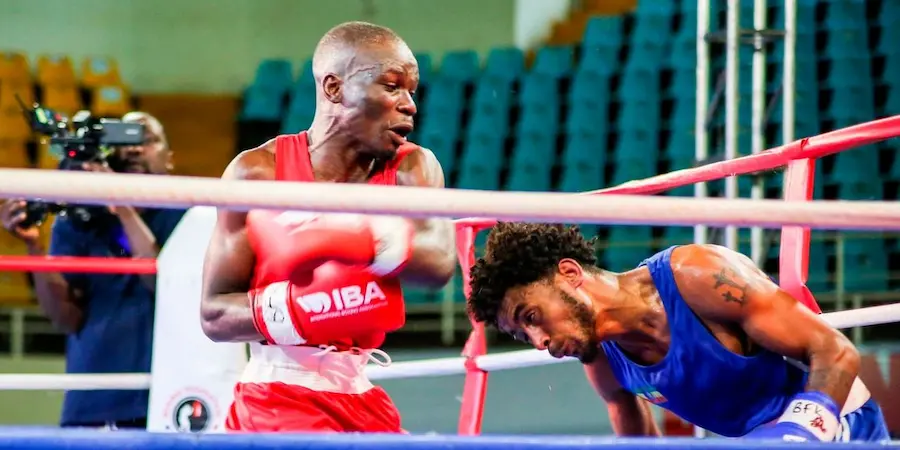
On a Tuesday night flight out of Nairobi, a familiar group of faces carried far more than luggage as they walked towards the departure gate. Kenya’s national boxing team, famously known as the Hit Squad, departed for Dubai with one shared dream, to conquer the world at the IBA Men’s World Boxing Championship 2025 and return home as champions, both in prestige and in prize money.
This is no ordinary world championship. The IBA Men’s World Boxing Championship in Dubai has been billed as the most lucrative boxing tournament ever staged, a historic moment for the sport and a life changing opportunity for fighters who usually operate far from boxing’s financial limelight.
Record prize money transforms the world stage
The numbers alone tell you why this edition of the IBA Men’s World Boxing Championship matters so much. The global competition carries a record breaking prize purse of 8.32 million dollars, with the top 104 fighters guaranteed a share of the money. For many boxers, especially from countries where funding is limited, this is not just a tournament, it is a potential turning point in their lives.
For the first time, winning a world title under the IBA banner comes with rewards that match the scale of the achievement. Gold medallists will walk away with 300,000 dollars, silver medallists will earn 150,000 dollars, and bronze medallists will take home 75,000 dollars. Converted to Kenyan currency, that means a gold medal is worth about KSh38.7 million, a silver about KSh19.3 million, and a bronze about KSh9.7 million, sums that underline how financially transformative a podium finish could be.
Importantly, the prize money is not only for the boxers themselves. As per IBA rules, these earnings are expected to be shared among the medal winning fighters, their coaches and their national federations. This structure acknowledges the broader ecosystem behind every boxer, from tacticians in the corner to officials and administrators who keep the programme alive.
Thirteen weight divisions and a truly global test
The Dubai championships will unfold across 13 weight divisions, spanning from minimum weight at 48kg to super heavyweight above 92kg. It is a structure designed to showcase the full spectrum of boxing skills, from speed and footwork in the lighter categories to power and resilience among the heavier fighters.
Every bracket will feature elite boxers from around the world, with national federations sending their best in search of medals, rankings and financial rewards. For Kenya, the stage offers a chance to test its finest against the most complete field available in amateur and semi professional boxing under IBA.
A balanced Kenyan squad mixing experience and new energy
Kenya travels to Dubai with a 19 man delegation, a group that blends hardened campaigners with hungry newcomers, all united under the Hit Squad identity. The squad reflects deliberate planning, ensuring that each weight category has a specialist capable of competing at the highest level.
At the heart of it all stands team captain Boniface Mogunde, who will compete in the light middleweight division at 71kg. As captain, Mogunde embodies both experience and responsibility, guiding younger teammates in the gym and outside it, while also plotting his own path through one of the most competitive weight classes in the championship.
Full breakdown of Kenya’s 19 man delegation
Kenya’s presence in Dubai will be felt right across the programme, from the lightest division to the heaviest. The Hit Squad’s fighters are spread across all the key weight categories.
Kenyan boxers by weight category
- Minimum weight 48kg, Silas Onyango,
- Flyweight 51kg, Kelvin Maina,
- Bantamweight 54kg, Shaffi Bakari,
- Featherweight 57kg, Paul Omondi,
- Lightweight 60kg, Washington Wandera,
- Light welterweight 63.5kg, Caleb Wandera,
- Welterweight 67kg, Wiseman Kavondo,
- Light middleweight 71kg, Boniface Mogunde, team captain,
- Middleweight 75kg, Edwin Okong’o,
- Light heavyweight 80kg, Robert Okaka,
- Cruiserweight 86kg, Chrispin Ochanda,
- Heavyweight 92kg, Peter Abuti,
- Super heavyweight over 92kg, Clinton Macharia.
From the minimum weight class to the super heavyweight ranks, each boxer carries his own story of sacrifice, early morning runs, late night gym sessions and the quiet belief that this trip to Dubai can change everything.
The technical team behind the Hit Squad
Behind every punch thrown in the ring lies hours of planning, video analysis and tactical drilling. Kenya’s travelling party includes six technical officials tasked with turning potential into performance on the biggest stage.
- Head coach, Musa Benjamin,
- Deputy head coach, David Munuhe,
- Trainer, John Waweru,
- Head of delegation, Anthony Otieno Ombok,
- Communications director, Duncan Kuria,
- Physiotherapist, Sospeter Kinuthia.
Head coach Musa Benjamin will mastermind the in ring strategy, choosing when to push his fighters forward and when to ask them to sit back and counter. Deputy coach David Munuhe and trainer John Waweru will fine tune technique and conditioning, ensuring the Hit Squad enters every bout fresh and tactically prepared.
Outside the ropes, head of delegation Anthony Otieno Ombok will steer the logistics and leadership responsibilities, while communications director Duncan Kuria will manage media duties and messaging around the team. Physiotherapist Sospeter Kinuthia will handle perhaps the most underrated job of all, keeping the fighters healthy through a packed schedule where even minor injuries can decide a contest.
Why this championship matters so much to Kenya
For Kenyan boxing, this trip to Dubai is about far more than a medal count. It is about visibility, validation and the financial stability that success at a tournament of this magnitude can bring. With the IBA Men’s World Boxing Championship offering unprecedented rewards, even a single podium finish can significantly support both individual careers and the national federation.
The Hit Squad has already built a reputation as a fighting unit that performs with heart and resilience. Now, they have the chance to match that reputation with tangible results in an event that has captured the attention of the entire boxing community. Every Kenyan boxer who steps through the ropes in Dubai carries both personal ambition and the aspirations of a country that has long loved its fighters.
| CASINO | BONUS | INFO | RATING | |
|---|---|---|---|---|
|
bonus
90 free spins weekly!
See 4 Bonuses
|
info
OGL/2024/137/0132 secure platform with top casino games & bonuses. |

|
||
|
bonus
Earn 10% cashback on your Aviator net losses!
See 6 Bonuses
|
info
Large welcome bonus, crypto-friendly, huge provider list. OGL/2024/1394/0725 |
|
||
|
bonus
Win Ksh 30,000 daily in Aviator tournament!
See 8 Bonuses
|
info
20+ software providers, Aviator+ other crash games, BK 0000671 PG 0000428 |
|
||
|
bonus
First Deposit Bonus
See 10 Bonuses
|
info
ALSI-202410048-F12 casino with great bonuses & big titles from operators. |
|




The emotional weight of a record breaking prize purse
When you talk to boxers at this level, they rarely speak first about the money. They mention pride, national colours, and the hunger to prove themselves against the best. Yet in quieter conversations, the scale of the Dubai prize purse becomes impossible to ignore.
A gold medal worth 300,000 dollars could pay for a family home, fund training camps for years to come or help younger relatives through school. Shared between boxer, coaches and federation as per IBA rules, it can also strengthen domestic programmes, upgrade equipment and invest in youth development. A single medal can ripple through an entire system.
That is why the phrase “record breaking prize purse” is more than a marketing line. For fighters from countries where sporting support is often stretched thin, this is a rare moment when the financial side of the sport aligns with the level of sacrifice demanded in training. It turns every bout into a high stakes test of skill, composure and mental strength.
Thirteen paths, one collective dream
The structure of the championships, with 13 weight divisions and 104 fighters guaranteed prize money, ensures that many nations will leave Dubai with something to show. For Kenya, every category presents a different kind of test, from the speed of the lighter fighters to the raw power of the heavyweights.
In the minimum weight division, Silas Onyango will rely on quick feet and sharp combinations, knowing that in the lightest category, mistakes are punished instantly. In flyweight, Kelvin Maina will look to blend timing and tempo, keeping opponents guessing. Bantamweight specialist Shaffi Bakari, featherweight contender Paul Omondi and lightweight fighter Washington Wandera will all face deep fields filled with technical experts.
As the weights climb, the nature of the fight changes. Light welterweight boxer Caleb Wandera and welterweight representative Wiseman Kavondo will need to balance work rate with power, while captain Mogunde at light middleweight carries both his own hopes and those of the squad. Middleweight boxer Edwin Okong’o and light heavyweight fighter Robert Okaka will be tested by physically mature opponents, where conditioning and ring intelligence become critical.
Then come the big men, cruiserweight Chrispin Ochanda, heavyweight Peter Abuti and super heavyweight contender Clinton Macharia. In these categories, one punch can change everything, which only adds to the tension when the bell rings. For them, discipline in defence and patience in attack will be vital as they chase a place among the top 104 prize earning fighters.
The quiet routines before the first bell
Before the opening contests begin on Wednesday, the Hit Squad will go through the rituals familiar to every team at a major tournament. There will be light shake out sessions to loosen the travel from their legs, meetings to discuss possible opponents and strategy, and repeated trips to the scales for those who need to make weight.
For the coaches, the days before the first bell are a constant balance between keeping the fighters sharp and not overworking them. Every decision, from the length of a pad session to the timing of a team meeting, is designed to give the boxers the best possible platform to perform when it matters most.
Kenya’s chance to write a new chapter in boxing history
Kenya’s boxing story has always been rich in spirit and potential, but tournaments like the IBA Men’s World Boxing Championship in Dubai offer something more, a place in the global narrative. The record 8.32 million dollar prize pool, the presence of top fighters from across the world and the guarantee that the best 104 boxers will share in the rewards, all combine to make this championship a genuine landmark.
For the Hit Squad, it is a stage built for dreamers and fighters, for those who have spent years in spartan gyms chasing a moment exactly like this. Whether it is a minimum weight flurry of punches from Onyango, a captain’s performance from Mogunde, or a heavyweight finish from Abuti or Macharia, Kenya’s boxers know that every round in Dubai carries both sporting and personal significance.
As the global boxing community turns its eyes to Dubai, the Kenyan delegation walks in with heads high, gloves ready and hearts full. The mission is clear, to transform preparation into performance, to turn potential into podium places, and to bring home not just prize money, but a new sense of what is possible for Kenyan boxing on the world stage.
The bell in Dubai will sound for fighters from every corner of the globe, but for the Hit Squad, it will ring with a familiar echo. It will sound like early morning roadwork on Kenyan roads, like the thud of leather on worn gym bags, like every promise they ever made to themselves about one day reaching the very top. Now, under the bright lights of the IBA Men’s World Boxing Championship 2025, that day has finally arrived.